Quick answer: Lower coil resistance (measured in ohms) requires more wattage and produces more vapor and heat; higher resistance needs less wattage and produces a cooler, more restricted draw. Ohm’s law — voltage divided by resistance — determines how much current your battery actually delivers.
Ohms, watts, volts — the numbers on a vape screen look intimidating until you understand what each one actually controls. This vape wattage guide breaks down the handful of concepts that explain almost everything about how a device performs, without requiring an electrical engineering background.
What Coil Resistance (Ohms) Actually Means
Every coil has a resistance value, measured in ohms, printed directly on the coil or its packaging. Lower resistance — under 1.0 ohm, often called subohm — allows more current to flow, which produces more heat, more vapor, and requires higher wattage to run properly. Higher resistance coils, generally 1.0 ohm and above, restrict current flow more, run cooler, and need less wattage, which is why they’re common in mouth-to-lung pod systems and starter kits.
What Wattage Controls
Wattage is the amount of power your device sends to the coil, and it’s the main dial you actually adjust day to day. Turn wattage up and you get a warmer draw, more vapor, and faster coil consumption; turn it down and you get a cooler, more restricted hit with better battery life and slower coil wear. Every coil has a manufacturer-recommended wattage range printed on the packaging, and starting at the low end of that range is the safest way to break in a new coil.
Ohm’s Law, Explained Simply
The Formula
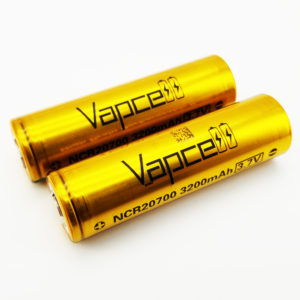
Ohm’s law states that current equals voltage divided by resistance. In practical terms for vaping, this means: as coil resistance drops, the current your battery has to supply goes up, which is exactly why very low-resistance coils in mechanical devices require batteries with a high continuous discharge rating.
Why This Matters for Safety
On a regulated box mod, the chip does this math automatically and won’t let you exceed safe limits for your battery. On a mechanical squonk mod or any unregulated device, there’s no chip stopping you — you have to calculate the amp draw yourself and confirm it’s within your battery’s rated output before ever firing the coil. This single calculation is the most important piece of safety math in vaping, and skipping it is where avoidable battery incidents come from.
Subohm vs. Higher-Resistance Vaping
Subohm (Under 1.0 Ohm)
Subohm coils are built for direct-lung vaping — bigger clouds, warmer draws, and higher e-liquid consumption. They’re paired with high-wattage box mods and subohm tanks, and they typically use lower nicotine e-liquid since the increased vapor delivers more nicotine per puff even at lower concentrations.
Higher Resistance (1.0 Ohm and Above)
Higher-resistance coils are built for mouth-to-lung vaping — a tighter draw closer to a cigarette, run at lower wattage with less vapor production. These pair naturally with pod systems and higher-strength nicotine salts, since the smaller vapor volume needs a stronger nicotine concentration to feel satisfying.
How to Read a Coil’s Recommended Wattage Range
Almost every commercial coil has a printed wattage range — for example, 40 to 60 watts. Starting at the bottom of that range for the first several puffs lets you gauge flavor and vapor production before working upward, and it also extends the coil’s usable life compared to running it at the top of its range from the very first puff. If a coil consistently tastes burnt even within its recommended range, that’s usually a wicking or e-liquid saturation problem rather than a wattage problem.
Common Coil Wire Types and How They Affect Resistance
Kanthal
Kanthal is an iron-chromium-aluminum alloy that’s been a vaping standard for years, prized for being simple, durable, and predictable across a wide resistance range. It’s a solid default wire type for anyone just getting into rebuilding.
Nichrome
Nichrome heats up faster than Kanthal at a given wattage and is a common choice for vapers who want quicker ramp-up without switching to more advanced temperature control features.
Stainless Steel
Stainless steel wire is unique in that it can be run in either standard wattage mode or temperature control mode, since it has a documented, predictable resistance curve as it heats. This flexibility makes it popular with vapers who want to experiment with temperature control down the road without buying entirely new coils.
Common Wattage Mistakes New Vapers Make
Starting at the Top of the Recommended Range
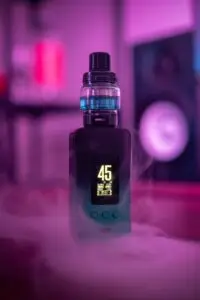
Jumping straight to the highest wattage a coil supports feels tempting for bigger clouds, but it dramatically shortens coil life and often tastes harsher than starting lower and working up gradually.
Ignoring the Wattage Range Printed on the Coil
Every coil’s recommended range exists for a reason tied to its specific wire gauge and wick material. Guessing a wattage based on a different coil you’ve used before, rather than checking the current one’s actual range, is a common source of burnt or underwhelming hits.
Confusing Wattage Problems with Coil Problems
A weak or harsh hit is sometimes blamed on a “bad coil” when the real issue is simply wattage set outside the coil’s effective range. Double-checking your wattage against the printed range before assuming a coil is defective saves a lot of unnecessary coil swapping.
Putting It Together When Buying a New Setup
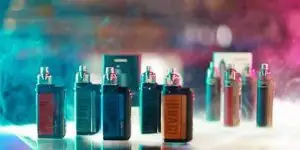
When you’re shopping for a new tank or coil, resistance and wattage range should be the first things you check, not flavor or brand. A quick look through a set of prebuilt coils will show resistance and recommended wattage printed clearly on most packaging, which makes matching a new coil to your existing mod straightforward once you know what to look for.
If you’re moving into rebuildable territory and building your own coils rather than buying prebuilts, understanding ohms and wattage becomes even more important, since you’re now responsible for calculating resistance yourself based on wire type, gauge, and wrap count. Vapor 42 generally recommends new rebuilders start with simple, well-documented coil builds and a reliable ohm reader before experimenting with more advanced configurations. A look through rebuildable atomizers with wider, more forgiving decks is a good way to practice these fundamentals before moving to anything more advanced or unregulated.
None of this requires memorizing formulas during your daily vape — once you understand the basic relationship between resistance, wattage, and current, reading any coil’s packaging or any mod’s display becomes second nature. That understanding is really what separates someone who occasionally gets random bad hits from someone who consistently sets up their device correctly the first time.
If you only take one thing away from all of this, let it be checking the printed wattage range before firing any new coil. That single habit alone prevents the majority of burnt-taste complaints and premature coil failures that otherwise get blamed on bad luck or a defective product.
FAQs
- What does a lower ohm rating on a coil mean?
A lower ohm rating means less resistance, which allows more current to flow and produces more heat and vapor. Lower-resistance coils need higher wattage and are common in subohm, direct-lung vaping setups.
- How do I know what wattage to use with a new coil?
Check the coil’s packaging for its manufacturer-recommended wattage range and start at the low end. Working upward gradually lets you find your preferred flavor and vapor level while extending the coil’s usable life.
- What is Ohm’s law and why does it matter for vaping?
Ohm’s law states that current equals voltage divided by resistance. For vaping, it explains why lower-resistance coils draw more current from your battery, which is critical for choosing a battery with an adequate discharge rating on unregulated devices.
- Is subohm vaping more dangerous than higher-resistance vaping?
Subohm vaping isn’t inherently more dangerous on a regulated device, since the chip manages current automatically. On unregulated mechanical mods, low-resistance builds do require more careful battery math to stay safe.
- Why does my coil taste burnt even within its recommended wattage range?
A burnt taste within the correct wattage range is usually a wicking or saturation issue rather than a resistance problem — the cotton isn’t absorbing e-liquid fast enough for the heat being applied. Letting the tank sit longer after refilling or adjusting your wicking often resolves it.
- Do I need to understand ohms and wattage if I only use a pod system?
Not in depth, since most pod systems come with fixed or simple coil options and little to no wattage adjustment. It becomes much more relevant once you move to a box mod, subohm tank, or any rebuildable setup.